Is listening important to you?

Is listening important to you?

Good listening is empathic listening; defined as a way of listening and responding to another person that improves mutual understanding and trust. It allows us to receive and accurately interpret the speaker’s message, hence able to provide an appropriate response. This is an important skill to master for both personal and professional interactions. When an individual feels understood, an emotional burden is lifted, stress and defensiveness will reduce. Hence as an empathic listener, you empower the speaker to an increased self-esteem and clarity.

Empathic listening comprises two crucial aspects – Active and Reflective Listening.

Active listening is mindful hearing and genuine effort to comprehend what’s spoken by the other. Attentiveness is the key factor. Reflective listening focuses on reflecting the speaker’s words and feelings by giving feedback through a “paraphrased rendition”; the interpretation confirms and assures that the speaker is heard and understood.

5 TIPS TO INCREASE YOUR LISTENING ABILITIES:

Be Fully In The Moment – Paying attention not just to the words but tone, facial expressions and body language for cues on how they are really feeling. Good eye contact is necessary to convey engagement.

Put Yourself In Their Shoes – Imagine yourself in their situation. Empathy is the ability to project oneself into the personality of another person in order to better understand his/ her emotions.

Do Not Interrupt – Don’t dominate the conversation or impose your ideas on the person. Encourage them to express themselves more instead.

Paraphrase Main Points & Restate them – Echoing what the speaker said allows needed clarification and also assures the speaker that he/she is understood and heard correctly.

Adopt An Attitude of Unconditional Regard – Unconditional positive regard is accepting the speaker totally for who he or she is without evaluating or censoring; and disapproving of particular feelings, actions or characteristics. It liberates the speaker to express him or herself freely.

The ability to listen is one of the most crucial skills of a counsellor. When you are able to truly listen, you learn to empathise, and you learn to sympathise with people around you. It changes the way you perceive the world and informs the way you are able to help.

Join us at College of Allied Educators to learn more about the limits of your abilities and discover how you can help others overcome their doubts, fears, disagreements, and challenges in order to build a happier, more meaningful life.

  • POSTGRADUATE DIPLOMA IN COUNSELLING PSYCHOLOGY Postgraduate Diploma in Counselling Psychology (PGDICP) is a counselling psychology course accredited by the Singapore Association for Counselling (SAC). The part-time Postgraduate Diploma in Counselling Psychology programme focuses on developing and enhancing experiential knowledge and skills through a holistic approach. Some of the subjects covered include Counselling Children, Addiction Intervention, Crisis Intervention, and Family Therapy.
  • DIPLOMA IN COUNSELLING PSYCHOLOGY Diploma in Counselling Psychology (DCPSY) is a counselling course covering a range of conceptual and functional skills in counselling. It trains students to apply appropriate counselling psychology skills in different situations, and equips students with the ability to work effectively as a counsellor.

For a FREE COURSE PREVIEW

CALL US at 6533-0031 EMAIL your enquiry to ENQUIRY@ICAE.EDU.SG

or Register for your free preview below:

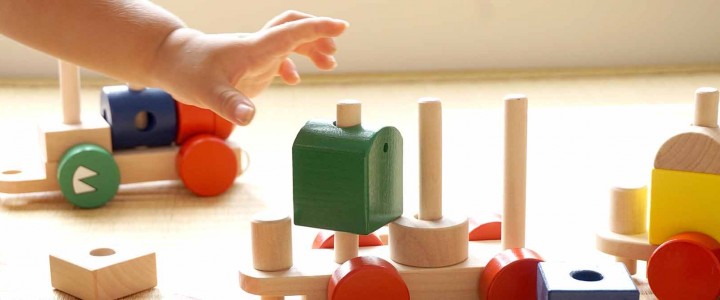
Is there meaning to how children play?

Is there meaning to how children play?

We don’t often attribute meaning to how children play or even what they decide to play with. They seem to always have their preference for the things that they do. Especially at a younger age, they may not even be able to tell us why specifically they do certain things. Especially in early childhood trauma cases, the child may indeed not talk much at all and instead opt to do their thing in silence.

Read more

How you can create inclusive learning environments for children!

How you can create inclusive learning environments for children!

The demand for educators who are equipped with the necessary skills and knowledge to create an inclusive environment for their students has never been higher.

Inclusive education is education that makes consideration for and understands the needs of students’ differences and diversity whether those are physical, emotional, social, or academic. Students, regardless of any challenges they may have, should be placed in appropriate education classes so they are able to receive high-quality instruction, intervention, and support that enable them to succeed. Students should feel welcomed and comfortable in the environment and are supported throughout their education.

Read more

Are there different types of loneliness?

Are there different types of loneliness?

When people think about loneliness, some may think of someone who is alone all the time; but being lonely and being alone are different things. Being alone is a physical state where a person could be by themselves a lot of the time.

This doesn’t necessarily mean they are lonely. Some people have less need to be around other people and are quite comfortable to be themselves, and even to do things by themselves. Being lonely is a feeling that you need people but for whatever reason, don’t have access to them. It is a feeling of isolation. Sometimes being alone can also be lonely. There are different types of loneliness that you can face:

Read more

Is there a right time to test for Autism?

Is there a right time to test for Autism?

Autism Spectrum Disorder (ASD) can be diagnosed as early as 18 months but professionals will suggest parents monitor and wait until age 3. Parents will actually predict their child’s later autism spectrum disorder long before any professional diagnosis. According to a 2009 research (J Dev Behav Pediatr. 2009 Oct; 30(5): 367–375.),

Read more

Will speech therapy help my child?

Will speech therapy help my child?

Children who suffer from communications disorders suffer emotional and social effects that may be a huge quality of life issue for them. Speech therapy is used to help improve your child or your students’ ability to communicate. Spoken communications is incredibly important to the development of the child, allowing them to express their emotions, needs, and thoughts.

In a research report by Jan Broomfield & Barbara Dodd (Speech Therapy 4 Kids), children who received intervention and underwent speech therapy improved over those that did not:

Children with primary speech and/or language disorder who received therapy over 6 months made statistically more positive change in standard scores on widely used speech–language therapy assessments than children held on a waiting list without treatment

There are other benefits of speech therapy:

1. More Independence:
When a person suffers from communications disorders, they often do not have the ability to fully communicate their needs or feelings. They often have to rely on other people to interpret communications and guess on their behalf. Therapy can help in dealing with the issues causing the disorder, giving them the ability to independently communicate intent, desire and feelings.

2. Better Socialisation:
The ability to properly communicate with other people within society allows individuals to build connections to their community and other people, opening up a whole new world of activities and interactions that would have otherwise been closed off. This also allows individuals to find their place with their peers in society.

3. Higher Self Esteem:
When people feel they can’t do things by themselves, have little to no place within society and amongst their peers, their value in themselves drops considerably. Low self esteem in such situations can further isolate individuals from society, their family and even putting them on a self-destructive path. Increasing a person’s self esteem will give them confidence and self value, allowing them to go out into the world to experience it positively.

If your child has difficulties with their speech and language abilities, they will have difficulty engaging peer group conversations, and if left untreated, further complications will arise by the time they pass their teens and enter adulthood.

Join us for our Professional Certificate in Speech Therapy Assistant programme.

This 6-months* part-time Professional Certificate in Speech Therapy Assistant (PCSTA) programme is designed to train potential Speech Therapy Assistants to support children and adults with communication and swallowing disorders or ailments.

You will gain the tools to assist in the assessment, screening and treatment of communication and speech disorders to help affected children and adults gain their independence and improve the quality of their lives.

For a FREE COURSE PREVIEW

CALL US at 6533-0031
EMAIL your enquiry to ENQUIRY@ICAE.EDU.SG

or Register for your free preview below: