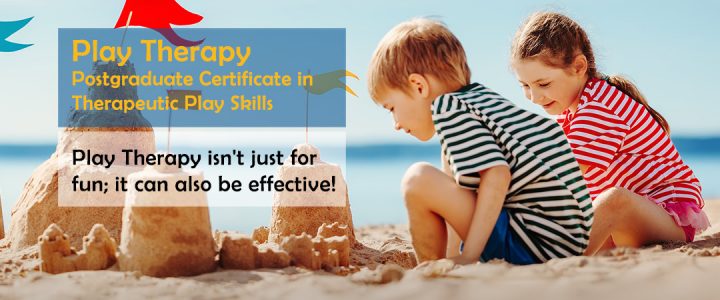
Play Therapy isn’t just for fun; it can also be effective!

Play Therapy isn’t just for fun; it can also be effective!

Play is often seen as something fun for children to do, or something to keep children distracted. What often gets ignored is that play also serves an important purpose in a child’s development. It’s the primary way children first learn about their world, and also how they learn about the learning process. By playing with toys, with other children, with adults, children experiment, try new things, learn what to do and what not to do, what’s acceptable and isn’t. They learn about boundaries, socialisation, and develop communication skills.

Read more

Will ADHD improve over time?

Will ADHD improve over time?

Attention Deficit Hyperactivity Disorder (ADHD) is a disorder that affects up to 11% of children between the ages of 4 – 17 years old and is more common than many people believe. While some people may see this as a disorder that just affects children, at least 4% of adults have been diagnosed with ADHD. It is believed that many more adults have simply not been diagnosed as diagnosis for ADHD was not as common in the past. ADHD is best diagnosed early, sometimes as young as 4 years old, so the child can receive the support they need to manage it. Simply waiting for it to improve or disappear over time will likely just mean the child grows up having to deal with their issues by themselves.

Read more

Who can benefit from Play Therapy?

Who can benefit from Play Therapy?

Play Therapy is an intervention strategy to help children safely communicate and express their feelings and thoughts naturally in order to deal with trauma, loss, delayed development, and other developmental and social issues. Play therapy is fun, free-flowing, non-directed, and effective. Play therapy allows people who are experiencing emotional or behavioural issues to open up their emotions in the safe space of the ‘playroom’, where they are allowed to face their thoughts and emotions nonverbally.

Read more

Will Play Therapy help my child?

Will Play Therapy help my child?

Play Therapy is a form of psychotherapy and counselling that uses play in a non-directed method to allow the Child to lead therapy sessions. This process reveals and reflect the child’s behaviour back in such a way that the child can confront their own behaviour, giving the therapist a powerful diagnostic tool to determine the cause for any issues.

Play therapy allows children and people who are experiencing emotional or behavioural issues to open up their emotions in the safe space of the ‘playroom’, where they are allowed to face their thoughts and emotions nonverbally. It is cited as one of the most effective treatments for children suffering from trauma or PTSD; with a number of articles and papers written about its efficacy.

Some of the benefits of Play Therapy include:

  • Helping children learn to develop a better sense of their abilities and increasing their confidence.
  • Helping children develop creative problem solving abilities.
  • Helping children learn about empathy and respect for feelings of others by giving them space to get in touch with their own thoughts and feelings.

PTUK’s Research has found Play Therapy to be an effective therapeutic approach for children.

play therapy effectiveness

Parents also reported pronounced improvements to their children’s emotional outlook, better overall conduct, and improved relationships with their peers.

Via PlayTherapyTV

College of Allied Educators offers the Postgraduate Certificate in Therapeutic Play Skills, training participants to effectively use therapeutic play skills to provide emotional and psychological support to children.

For a FREE COURSE PREVIEW

CALL US at 6533-2763
EMAIL your enquiry to ENQUIRY@ICAE.EDU.SG

or Register for your free preview below:

Does Speech Therapy help children improve their socialisation?

Does Speech Therapy help children improve their socialisation?

Children who suffer from communications disorders suffer emotional and social effects that may be a huge quality of life issue for them. Speech therapy is used to help improve your child or your students’ ability to communicate. Spoken communications is incredibly important to the development of the child, allowing them to express their emotions, needs, and thoughts.

Read more

Is sloppy writing a sign of something else?

Is sloppy writing a sign of something else?

Each of us have different handwriting styles. Some are neat while others are sloppy and misaligned, yet still remain legible. It is when the handwriting is illegible that you must take special note. Children who have trouble expressing themselves in writing may have a condition known as ‘Dysgraphia’. The term comes from the Greek words dys, which means “impaired”, and graphia, meaning “writing letter by hand”.

Read more

What are the stages of your child’s speech & language development?

What are the stages of your child’s speech & language development?

If you are unsure about how your child’s speech and language is developing because they may appear to be unresponsive to vocal cues, or seem to be taking longer than their peers to speak in full sentences, the natural reaction may be to think the child might have speech and language delay. This may not always be the case.

Here are some things you need to know

In most instances, children develop along a progressive schedule with generally predictable milestones.

0-5 months:

  • Responds to sources of sound or voices
  • Makes cooing noises or displays sounds associated with emotions like laughter.

6-11 months:

  • Uses gestures
  • Attempts to repeat words of adults
  • starts babbling

12-17 months:

  • Is able to follow simple directions
  • Attempts to imitate full words
  • Starts to understand and answer basic questions non-verbally

18-23 months:

  • Has a vocabulary of up to a dozen words
  • Can ask for common things by name
  • Can pronounce vowels properly and starts using other sounds

2-3 years:

  • Understands and uses “you,” “I,” “me,” and other pronouns
  • Starts forming multiple words into a phrase or short sentence
  • Has ability to verbally reply to simply questions

3-4 years:

  • Speak at a level that strangers should be able to understand
  • Can express their feelings and thoughts
  • Able to repeat and convey whole sentences

Contact us to see how you can develop an understanding of the different types of exceptional children, their needs, and the different special needs programmes and specialties that are available to you, for them.

CAE’s 12-months Advanced Diploma in Special Education course trains educators and parents in the identification, diagnosis and treatment of these needs and the basic principles and practices of effective teaching and learning. The programme is highly practice-oriented to ensure that what you learn in class can be applied to children with special needs under your charge.

CAE’s Diploma in Learning Disorders Management & Child Psychology programme is designed specifically to train potential teachers, parents and caregivers to identify, detect and support children with special needs, such as Autism, Attention Deficit Hyperactivity Disorder (ADHD), Dyspraxia, and Dyslexia.

For a FREE COURSE PREVIEW

CALL US at 6533-0031
EMAIL your enquiry to ENQUIRY@ICAE.EDU.SG

or Register for your free preview below: