
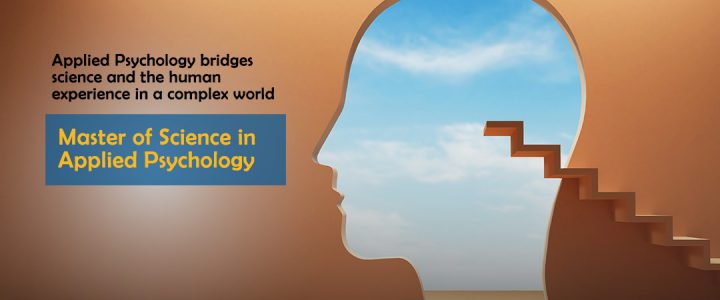
Applied psychology has become one of the most influential forces shaping how we understand human behaviour, support mental well‑being, and design healthier communities. As societies face rising mental‑health needs, rapid technological change, and increasingly complex social dynamics, the demand for professionals who can translate psychological science into real‑world solutions has never been greater.
This is where applied psychology stands apart: it is not just about studying the mind — it is about using psychological knowledge to improve lives.
Modern life places people under unprecedented pressures. Social media reshapes identity and relationships. Workplaces demand adaptability and emotional resilience. Children and adults alike navigate these stresses, uncertainty, and shifting expectations. These are some of the things that are putting real pressure on people in their daily life.
Applied psychology responds to these challenges by asking practical questions:
- How do people think, feel, and behave in everyday environments?
- What evidence‑based strategies can improve mental health and well‑being?
- How can psychological insights guide better decision‑making in organisations, schools, and communities?
By grounding interventions in scientific research, applied psychology ensures that support is not based on guesswork, but on proven methods that create meaningful change. At the heart of applied psychology is a multidisciplinary understanding of the human mind.
There are numerous core areas that contribute to this foundation, some of which are:
Social psychology, the power of human connection
Social psychology explores how people influence one another — often without realising it.
It examines:
- Group behaviour and conformity
- Attitudes and persuasion
- Prejudice and social identity
- Interpersonal relationships
These insights help psychologists design interventions that promote cooperation, reduce conflict, and strengthen community bonds.
Brain and behaviour, the biological roots of personal experience
Advances in neuroscience have transformed our understanding of mental processes. This field investigates:
- How the brain shapes emotion, memory, and motivation
- The neurological basis of psychological disorders
- How brain injuries affect behaviour and cognition
Such knowledge is essential for developing effective treatments and supporting individuals with neurological or developmental conditions.
What makes applied psychology unique is its commitment to action. It transforms scientific knowledge into practical tools used in various settings:
- Clinical and counselling settings
- Schools and educational programmes
- Healthcare environments
- Corporate and organisational development
- Community mental‑health initiatives
Professionals trained in applied psychology learn to analyse complex situations, evaluate evidence, and design interventions that genuinely help people. This includes skills such as:
- Conducting assessments
- Applying therapeutic techniques
- Interpreting behavioural data
- Communicating psychological concepts clearly
- Working ethically with diverse populations
These competencies are essential for anyone pursuing a career in mental‑health support, behavioural science, or human‑centred professions.
Join us at College of Allied Educators to learn more about how you can equip yourself with a deeper understanding of applied psychology and its application in the provision of psychological client care and treatment!
MASTER OF SCIENCE IN APPLIED PSYCHOLOGY
Delivered collaboratively by Aston University and the College of Allied Educators (CAE), the MSc applied psychology equips students with knowledge, skills, and practical experience to pursue a successful, rewarding career in clinical psychology. Throughout the 15-month part-time programme, students will explore social psychology, brain and behaviour, cognition and cognitive neuropsychology, and psychology and well-being.
For a FREE COURSE PREVIEW
CALL US at 6533-0031 EMAIL your enquiry to ENQUIRY@ICAE.EDU.SG
or Register for your free preview below: