
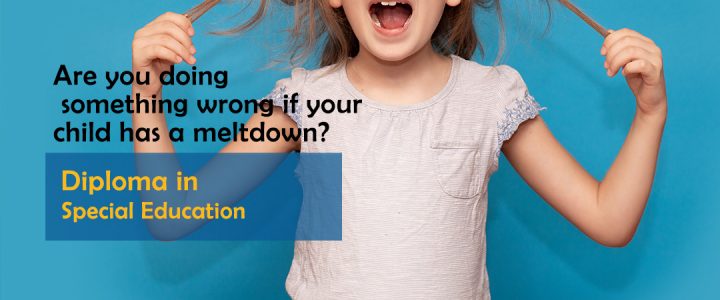
One of the more overtly dramatic events when caring for a child is when they have a meltdown, particularly if it’s in public. For many parents, caregivers and educators, there may be a sense of embarrassment on top of the contradictory feelings of frustration and sympathy for the child. There is always some underlying fear of being judged in public. If the child under our care is seen as disruptive or out of control, many adults may feel it’s their fault the child is behaving this way. Certainly, for some, they may feel other people judge them in this way.
While that kind of thinking may not be a conscious thought, it does come from a place of genuine concern and worry for our own reputation and capability as stewards for the well-being of the child under our care. That is to say, it’s only natural people may feel this way because we all make such snap judgements about other people over similar incidences in public.
Saying that, it’s not entirely a fair way to look at things, especially considering the child is not acting this way out of bad behaviour. A meltdown can have many causes but usually they are a reaction to something. This is the child’s way of communicating something they may not be able to properly process nor communicate properly.
For some children, particularly those with sensory sensitivities or challenges in self-regulation, meltdowns may occur as a way to express distress. Children with special needs have meltdowns due to different reasons, and these expressions of distress will run their course. A meltdown could be the result of a wide range of factors and have nothing to do with us or what we’ve done.
The Environment
Children with sensory sensitivities may experience certain sounds or textures more intensely than others, making it challenging to stay calm in overstimulating environments. The sensation of a woollen scarf on their skin, or the sound of a motorcycle down the street may be amplified for the child and cause a lot of distress. Children with special needs may experience sounds like these at an elevated level from their daily surroundings. They may not be able to tune it out and ignore them and thus can possibly lead to a meltdown.
Stress
Everyone handles stress differently- we pummel a stress ball; binge eat or maybe head to bed early and sleep a weekend away. But usually, we hold all our emotions in until we are in a “safe place” to unleash them on whatever medium we want to use to relieve our stress. For a Special Child, holding their emotions in may be a tall order. Their capacity to adapt to a stressful situation might be far less than another person and the only way the only avenue open to them may be a meltdown.
At that moment, children need understanding, reassurance, and a calm environment to regulate their emotions. Whether it’s because they need to be removed from the environment triggering the meltdown or something else. Remember, you know the child best and likely have an understanding of what triggers them and, in some cases, why.
It’s good to acknowledge that you may feel a certain way, but you have means and ways to mitigate and work through these feelings. The child may not, and they need you at that crucial moment where they are having their meltdown. Understanding how to respond with empathy and effective strategies can make a real difference!
At the College of Allied Educators, we offer professional training designed for educators and caregivers who want to deepen their understanding and practical skills in supporting children with diverse learning needs
College of Allied Educators offers our Diploma in Education (Special Needs), that provides an essential introduction to the various categories of exceptional children and educational programmes available. The course will also train you to confidently design and implement an Individualised Education Plan or IEP to aid in specific areas such as language and communications.
This is a 6-month, part-time programme that will allow you to continue onto the Advanced Diploma in Special Education, a 12-month course that trains educators and parents with the knowledge and skills to identify, and support children with diverse learning and developmental needs and the basic principles and practices of effective teaching and learning.
For a FREE COURSE PREVIEW
CALL US at 6533-0031
EMAIL your enquiry to ENQUIRY@ICAE.EDU.SG
or Register for your free preview below: