
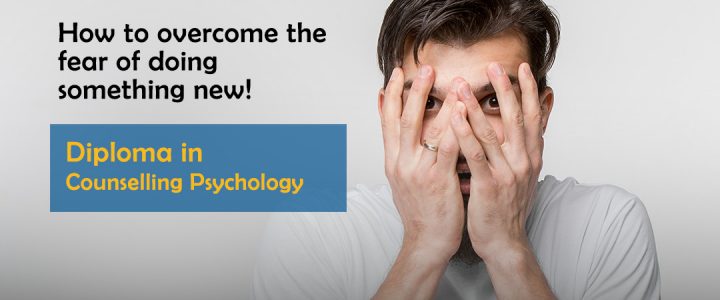
Fear has a way of disguising itself as caution, logic, or even “good timing.” Yet, beneath those layers often lies something much more human: the discomfort of stepping into the unknown.
Fear of new experiences—sometimes called neophobia—is rooted in our brain’s protective wiring. We’re built to anticipate danger, and unfamiliar situations naturally trigger uncertainty and discomfort. The fear of the unknown and fear of failure are two of the most common drivers behind our most human hesitations to trying something new. However, this should not be seen as a flaw, but rather a signal of where our edges are and where our potential growth lies.
When facing something new, we often experience:
- Catastrophic thoughts (“What if everything goes wrong?”)
- Physical anxiety (racing heart, tight chest, restlessness)
- Avoidance behaviours (postponing, overthinking, procrastinating)
The first step toward change is in recognising the patterns and that will help to inform our intentional responses, rather than defaulting to pure instinct.
Learning to reframe our fears
Counselling psychology often uses cognitive reframing to challenge unhelpful thoughts.
Instead of “What if I fail?”, we can explore a different way of thinking:
- “What might I learn?”
- “What if this goes well?”
- “What strengths have helped me through uncertainty before?”
Shifting the mental lens from threat to possibility reduces the emotional charge of the unknown.
Focussing on what we can control
New experiences often feel overwhelming because they involve uncertainty. Anchoring ourselves to what is within our control can help reduce anxiety. Focussing on our preparation, mindset, boundaries give us psychological and practical control over the things we can control, even if other things are outside our control. This aligns with certain counselling psychology principles that emphasise distinguishing between controllable and uncontrollable factors.
Learn how to normalise setbacks and redefine failure
Counselling psychology views failure not as a verdict or judgement, but as valuable data to be learned from and to be used to move to our next position. Every attempt—successful or not—provides information about our strengths, limits, and opens a path forward for us. This mindset reduces the shame often associated with trying something new and encourages resilience.
Fear just means we’re human. We shouldn’t look to eliminate fear but to help you build a healthier relationship with it; where fear informs us but doesn’t become our prison. When approaching new experiences with curiosity, self‑compassion, and structured support, you create space for growth that can help propel you forward in a way you never considered before. If you’re standing at the edge of something new, consider that the discomfort you feel is often the first sign that you’re moving toward something potentially really meaningful.
Join us at College of Allied Educators to start a new journey with Counselling Psychology. Learn how you can overcome your fears and setbacks, and to unlock your innermost self to find success and happiness.
DIPLOMA IN COUNSELLING PSYCHOLOGY
Diploma in Counselling Psychology (DCPSY) covers a range of conceptual and functional skills in counselling. It trains students to apply appropriate counselling psychology skills in different situations, and equips students with the ability to work effectively as a counsellor.
ADVANCED DIPLOMA IN COUNSELLING PSYCHOLOGY
Advanced Diploma in Counselling Psychology (ADICP) trains students to apply appropriate counselling skills in different situations while understanding their underlying theories. The ADICP programme introduces students to the nature of psychology and relates it to the theories and concepts of counselling. Students move on to explore themselves in order to promote personal growth and self-awareness, acquiring the key attributes of a competent counsellor and the proper methods of applying those skills.
For a FREE COURSE PREVIEW
CALL US at 6533-0031 EMAIL your enquiry to ENQUIRY@ICAE.EDU.SG
or Register for your free preview below: