
Children with special needs often navigate environments that feel overwhelming, unpredictable, or demanding, and their daily experiences can include challenges that other children may not encounter. Because of this, their emotional needs deserve intentional, compassionate attention. When caregivers, educators, and families prioritise mental well-being, they create a foundation that allows children not only to cope, but to flourish.
Children with special needs may experience frustration when communication is difficult, anxiety when routines change, or stress when sensory input becomes too intense. These emotional reactions are not signs of misbehaviour; they are signals that the child is trying to cope with something that feels too big or too fast. Supporting their mental health means recognising these signals early and responding with patience, structure, and empathy. A predictable environment, clear expectations, and gentle transitions can help children feel safe and grounded. When children know what to expect, they gain confidence in navigating their world.
Equally important is the role of emotional connection. Children with special needs thrive when they feel understood and valued. Simple acts — sitting with them during moments of distress, acknowledging their feelings, celebrating small victories — reinforce their sense of belonging. Emotional validation teaches them that their feelings matter and that they are not alone in managing them. Over time, this builds resilience and trust, two essential ingredients for healthy mental development.
Professional support also plays a vital role. Therapists, counsellors, and special educators can help children develop coping strategies, communication skills, and emotional regulation techniques tailored to their unique needs. Early intervention often leads to better outcomes, as children learn how to express themselves, manage stress, and build positive relationships. When families collaborate with professionals, children benefit from a consistent, supportive network that strengthens their emotional well-being.
Supporting mental health means supporting the whole ecosystem around the child. Parents and caregivers need guidance, encouragement, and rest. Teachers need training and resources. Communities need awareness and acceptance. When the adults surrounding a child feel empowered and informed, they create environments where children with special needs can grow with confidence, joy, and emotional security.
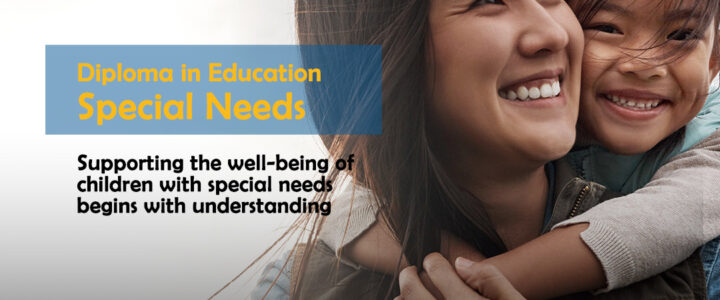
College of Allied Educators offers our Diploma in Education (Special Needs), that provides an essential introduction to the various categories of exceptional children and educational programmes available. The course will also train you to confidently design and implement an Individualised Education Plan or IEP to aid in specific areas such as language and communications.
This is a 6-month, part-time programme that will allow you to continue onto the Advanced Diploma in Special Education, a 12-month course that trains educators and parents with the knowledge and skills to identify, and support children with diverse learning and developmental needs and the basic principles and practices of effective teaching and learning.
For a FREE COURSE PREVIEW
CALL US at 6533-0031
EMAIL your enquiry to ENQUIRY@ICAE.EDU.SG
or Register for your free preview below: